April 2nd is World Autism Day—a day that marks the beginning of Autism Acceptance Month. It’s a time to move beyond awareness and into understanding, inclusion, and real support for individuals and families living with autism every single day.
For me, it’s also deeply personal.
Twenty years ago, I sat in a small room at the Thompson Center at the University of Missouri and heard words that would forever change the trajectory of my life: “Your daughter meets the criteria for autism.”
I didn’t know it then, but that moment wasn’t the beginning of something to fear—it was the beginning of a journey that would shape not only my daughter’s life, but mine in ways I could never have imagined.
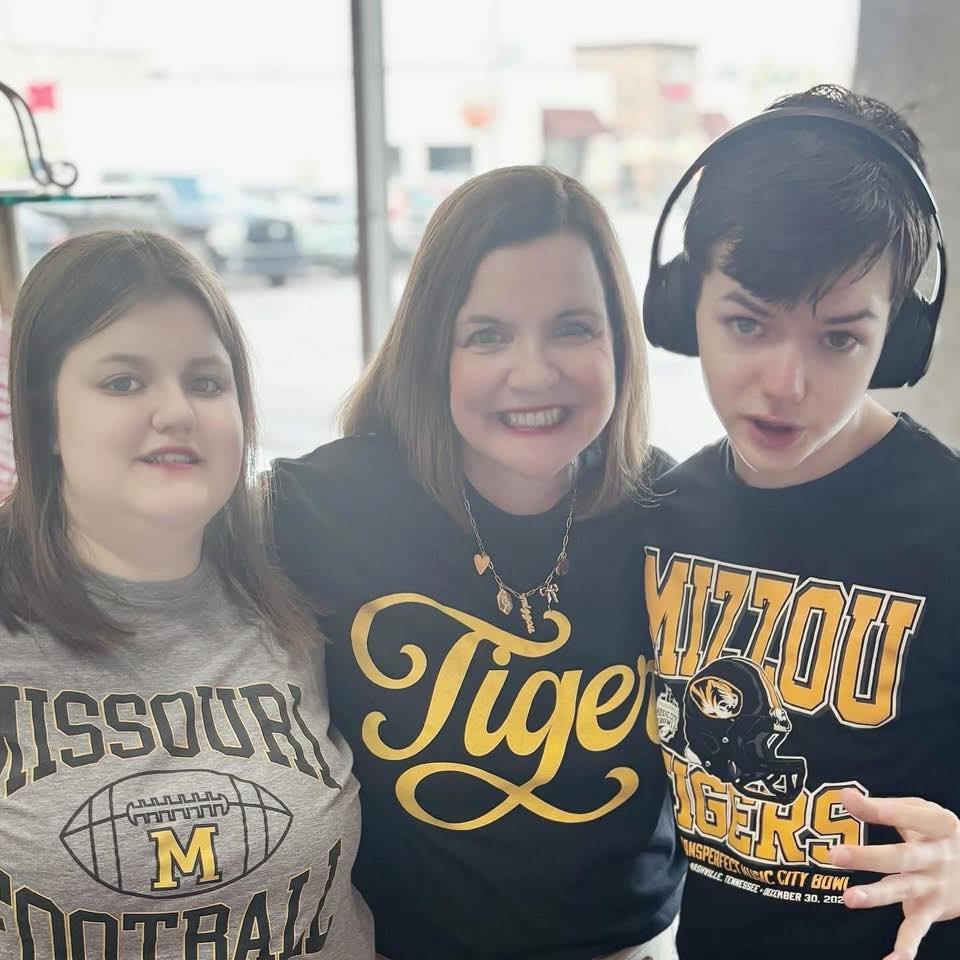
Recently, I had the opportunity to return to the Thompson Center—this time not as a newly overwhelmed parent, but as a mom, advocate, and co-founder of Ella’s Hope. Sitting behind a microphone, reflecting on twenty years of autism across the lifespan, I realized just how far we’ve come.
And how much we’ve learned along the way.
The Early Days: Fear, Questions, and a Whole Lot of Unknown
In the beginning, everything felt uncertain.
Would she speak? Would she have friends? Would she go to school, live independently, find happiness?
The questions were endless, and the answers were nowhere to be found.
Back then, autism felt like a closed door. Resources were limited. Support was inconsistent. And as a young mom, I often felt like I was navigating a world I didn’t understand—without a map.
But what I didn’t realize at the time was that autism wasn’t a closed door.
It was a different path.
Building Something Bigger Than Ourselves
Out of that uncertainty, Ella’s Hope was born.
What started as a way to support my daughter became something much bigger—a mission to support families across the lifespan. Because autism doesn’t end at childhood. It doesn’t follow a neat timeline. And it certainly doesn’t come with a one-size-fits-all solution.
Through Ella’s Hope, we’ve been able to:
- Provide AAC devices through Sophie’s Run for individuals who don’t have a voice
- Create spaces like Girls’ Night Out where young women can connect and belong
- Support adult programming through The Farmer’s House
Each program was built from lived experience—from the gaps we felt firsthand.
And later, that same mission helped lead to the creation of Autism Support Now (ASN), where we continue to walk alongside families in the day-to-day realities of autism.
Autism Across the Lifespan: What They Don’t Tell You
When your child is diagnosed, most of the focus is on early intervention.
But no one really prepares you for what comes next.
No one talks about:
- What happens at 10… or 15… or 20
- The transition to adulthood
- The weight of lifelong caregiving
- The quiet grief of adjusting expectations
- The unexpected joy that shows up anyway
Autism doesn’t stay the same—it evolves. And so do we.
As a parent, I’ve had to learn how to grow alongside my children. To shift expectations. To celebrate different milestones. To redefine success.
Because success doesn’t always look like independence.
Sometimes, it looks like connection.
Ella and Luke: Two Different Journeys, One Shared Love
Autism lives in both of my children—but it shows up in completely different ways.
Ella is verbal, thoughtful, and deeply intelligent. She thrives in puzzles, art, and math, yet navigates the world with anxiety that can feel all-consuming.
Luke is non-verbal, full of joy, and communicates in ways that don’t require words. His laughter, his music, his movement—those are his language.
Raising both of them has taught me one powerful truth:
There is no single autism story.
And that’s exactly why community matters.
The Hard Parts We Don’t Always Say Out Loud
There are still days that feel heavy.
Days where I think about the future and feel the weight of what it means to be a lifelong caregiver.
Days where I wonder who will take care of Luke when I can’t.
Days where Ella’s anxiety takes over our home in ways that are exhausting and relentless.
And as a single mom, those moments can feel even heavier.
But here’s what twenty years has taught me:
You can hold both grief and gratitude at the same time.
You can acknowledge the hard without losing sight of the beautiful.
What I Would Tell That Mom Sitting in the Thompson Center Today
If I could go back and sit next to that younger version of myself in that diagnostic room, I would tell her this:
You’re going to be okay.
Not because it will be easy—but because you will grow stronger than you ever thought possible.
Your child will teach you more than any book, doctor, or expert ever could.
And one day, you will sit in that same place—not with fear, but with perspective.
You will build something meaningful. You will help other families. You will find your voice.
And your child—your child will be exactly who they are meant to be.
Full Circle
Recording that podcast at the Thompson Center felt like coming full circle.
From diagnosis to advocacy. From fear to purpose. From isolation to community.
Twenty years later, I can say this with certainty:
Autism didn’t take something away from my life.
It gave me a new way to see it.
Donate to Our Fight
If our journey resonates with you, we invite you to support our mission through Ella’s Hope. Your donations help fund AAC devices, social programs, and resources for families navigating autism across the lifespan.
Together, we can continue building a world where every individual is seen, supported, and celebrated.
