Last night, I sat down to watch Grey’s Anatomy the way most people do — expecting dramatic surgeries, questionable romantic decisions, and a storyline or two designed to yank at the heartstrings. What I didn’t expect was to find myself staring directly into the deepest fear I rarely say out loud.
The episode featured a nonspeaking autistic young man. But he wasn’t the patient — his caregiver was.
And just like that, my chest tightened.
Because that storyline isn’t fiction for families like mine.
It is the fear we carry everywhere.
We don’t talk about it at dinner, we don’t lead with it at parent support groups, and we certainly don’t bring it up at IEP meetings. But it’s always there, humming beneath the surface like a quiet electrical current:
What happens to my child if something happens to me?
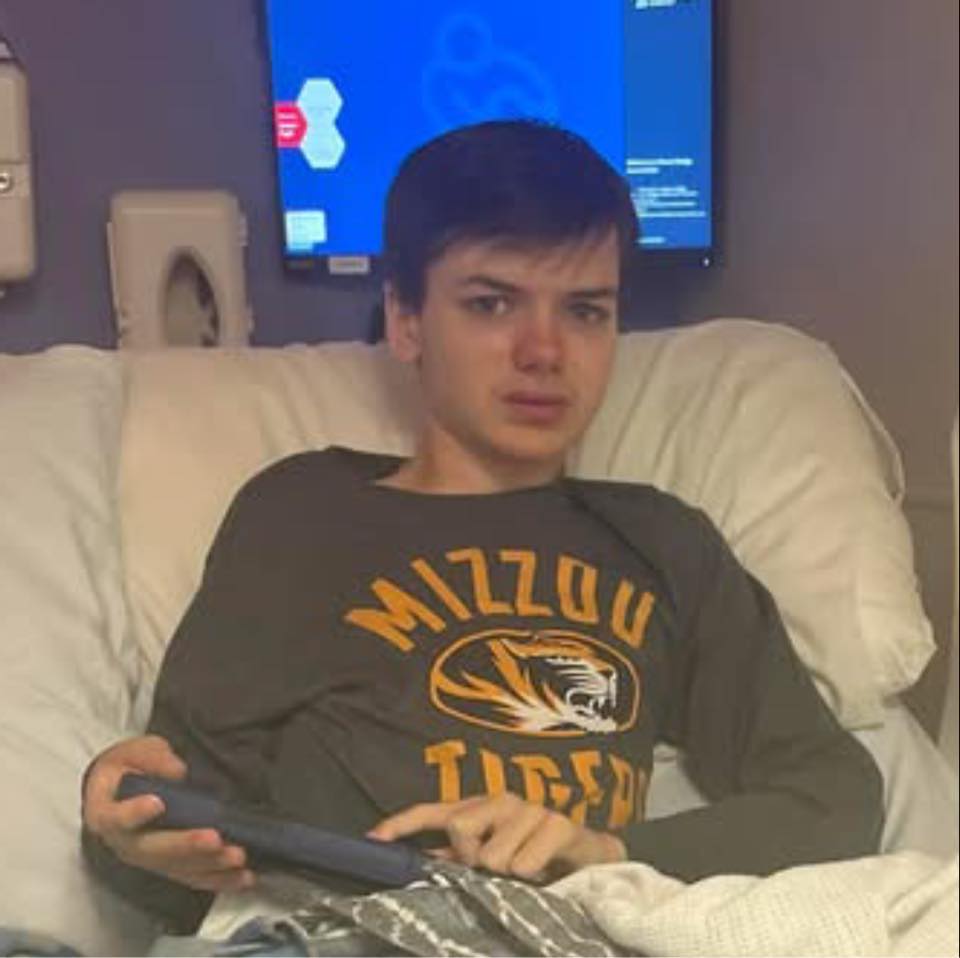
For my son Luke — my sweet, music-loving, nonspeaking, sensory-seeking teenager — I am not just “Mom.” I am:
- His interpreter
- His protector
- His advocate
- His comfort
- His historian
- His safe person
- His entire communication system
If I’m suddenly not there… who explains to the EMTs that he’s not “acting out,” he’s overwhelmed?
Who tells the nurse that bright lights make him panic?
Who warns the doctor that touching him without warning could send him spiraling?
Who makes sure he has his headphones, his iPad, his Travis Kelce jersey?
Who reassures him that he’s safe, in a world that—without context—can feel terrifying?
There’s no script for that.
No tidy TV resolution.
Just the quiet, aching reality that our kids aren’t protected by the systems meant to help them… they’re protected by us. And only us.
And to be fair, Grey’s didn’t get it all wrong.
When the doctors did have to treat the nonspeaking autistic individual, they actually tried. They slowed down, asked questions, problem-solved, and attempted to meet him where he was instead of forcing him into their system.
Was it a little too easy?
Of course.
Real-life medical situations with nonspeaking autistic individuals are rarely neat or quickly resolved — they’re messy, loud, emotional, and require far more patience and understanding than a few minutes of screen time allows.
But I will say this:
I appreciate the acknowledgment.
I appreciate the attempt to show that nonspeaking autistic people deserve care that considers their communication, their sensory needs, and their humanity.
I appreciate that the doctors weren’t dismissive, or cruel, or clueless in the way TV sometimes paints these moments.
Still, watching it unfold felt like someone pressed a finger onto a bruise I’ve carried for years.
Because while the episode wrapped the moment up in something resembling hope, my mind stayed stuck on the fear behind it:
Who will understand Luke the way I do if I’m ever the one on the stretcher?
It’s a storyline that rattled me because it was too real.
Too possible.
Too close.
But maybe there’s something important in that discomfort — a reminder of why self-care matters, why community matters, why advocacy matters, and why the fight for systems that actually support autistic adults can’t slow down.
Maybe the fear is also a push:
to prepare,
to plan,
to connect with others,
to make sure Luke’s world is filled with people who don’t just know him, but see him.
Because the truth is… I can’t bubble-wrap life.
But I can build a village.
And until then, I’ll keep doing what all caregivers do — loving fiercely, advocating loudly, preparing quietly, and hoping the world becomes more gentle with the kids who need gentleness most.
Sometimes, even a TV show can remind you what really matters.
